


Cotton vs. Polyester Reusable Totes:Which Material You Should Choose?
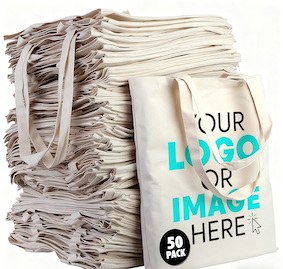
When you walk into a store today, you’re likely to see a variety of reusable tote bags made from different materials. Two of the most popular options are cotton and polyester, and choosing between them isn’t always straightforward. Both materials have their own set of advantages and disadvantages that make them suitable for different situations and purposes.
If you’re a business owner looking to create branded tote bags for your customers, or simply someone who wants to invest in quality reusable bags for everyday use, understanding the differences between cotton and polyester is essential.
This guide will help you make an informed decision by examining how these materials perform across multiple important factors including durability, water resistance, printing capabilities, brand perception, cost, environmental impact, and practical applications.
Understanding the Materials: Cotton and Polyester
Before we compare these two materials directly, it’s helpful to understand what we’re actually dealing with. Cotton is a natural fiber that comes from the cotton plant. It has used in textile production for thousands of years and is popular for its softness, breathability, and comfort against the skin. When you touch a cotton tote bag, you immediately notice how soft and natural it feels.
Polyester, on the other hand, is a synthetic material created through chemical processes. It make from petroleum-based products and develop in the mid-20th century as a way to create durable, low-maintenance fabrics. Polyester doesn’t wrinkle as easily as cotton and has different handling characteristics that make it valuable for specific applications.
These fundamental differences in their origins and composition lead to significant variations in how these materials perform in real-world conditions, which we’ll explore in detail throughout this article.
| Factor | Algodón | Poliéster |
| Aspecto | Natural, textured, organic | Smooth, modern, uniform |
| Durabilidad | Bien | Excelente |
| Resistencia al agua | Low — absorbs moisture | Higher — repels moisture |
| Peso | Heavier | Lighter |
| Printing Methods | Screen print, embroidery | Sublimation, heat transfer, screen print |
| Cost (Bulk) | Higher | Lower |
| Wrinkle Resistance | Lower — wrinkles easily | Higher — shape retention |
| Eco Credentials | Biodegradable, natural | Recyclable (rPET available) |
| Outdoor Performance | Feria | Excelente |
| Brand Perception | Premium, artisan, eco | Functional, sporty, practical |
Cotton vs. Polyester Reusable Totes:Which Material You Should Choose: – 1
1.Durability: How Long Will Your Tote Bags Last?
Durability is one of the most critical factors when investing in reusable tote bags, whether for personal use or as part of a business marketing strategy. A bag that falls apart after a few months represents poor value and reflects badly on any brand associated with it.
Cotton tote bags, when made from quality materials and proper construction, can last for several years with regular use. The natural fibers are strong and can withstand repeated washing and carrying. However, cotton does have a weakness: the fibers can break down over time, especially if exposed to harsh conditions or frequent washing in hot water. A well-made cotton tote will typically last between three to five years with normal use, though some premium versions can last even longer.
Polyester tote bags generally offer superior durability compared to their cotton counterparts. The synthetic fibers are less prone to breaking down and can handle more aggressive use without showing significant wear. A polyester tote bag can easily last five to seven years or more, even with heavy daily use. This makes polyester an excellent choice if you need bags that will withstand rough handling, frequent washing, or exposure to challenging environments.
When comparing durability directly, polyester wins in terms of longevity and resistance to wear and tear. However, cotton bags often develop a nice patina over time that many people find appealing, even as they age. The choice depends on whether you prioritize maximum lifespan or aesthetic development over time.
Cotton vs. Polyester Reusable Totes:Which Material You Should Choose: – 2
2.Water Resistance: Protection Against the Elements
Anyone who uses a tote bag regularly knows that water resistance matters. Whether you catch in unexpected rain or your bag sits near a spilled drink, how your tote handles moisture is important for protecting its contents.
Cotton is naturally absorbent, which is why it’s so comfortable to wear against the skin. Unfortunately, this same property makes it poor at resisting water. When cotton gets wet, it absorbs the moisture and takes a long time to dry. This can be problematic if you’re carrying items that need to stay dry, like electronics or important documents. Cotton totes can treat with water-resistant coatings, but these treatments often wash out over time and may not be environmentally friendly.
Polyester, by contrast, is naturally water-resistant. The synthetic fibers don’t absorb water the way cotton does, so moisture tends to bead up on the surface and roll off. This makes polyester tote bags much better suited for outdoor use or situations where water protection is important. A polyester bag will dry much faster than cotton and provides better protection for whatever you’re carrying inside.
If water resistance is a priority for your tote bag use, polyester is clearly the superior choice. This is particularly important for businesses operating in rainy climates or for bags that will be used near water.
Cotton vs. Polyester Reusable Totes:Which Material You Should Choose: – 3
3.Printing Performance: Making Your Brand Stand Out
For businesses using tote bags as promotional items or merchandise, the ability to print clear, vibrant designs on the bag surface is crucial. How well a material accepts and holds printed images directly affects how professional and appealing your branded tote bags will look.
Cotton tote bags accept printing very well. The natural fibers provide a good surface for ink to adhere to, and printed designs tend to look soft and natural. Screen printing on cotton produces beautiful results with good color depth, and the fabric absorbs the ink in a way that creates a nice, integrated appearance. Digital printing also works on cotton, though it requires special inks and pre-treatment. The downside is that printed designs on cotton can fade over time, especially if the bags are washed frequently or exposed to sunlight.
Polyester presents different challenges and opportunities for printing. Direct printing on polyester requires special inks and processes because the synthetic material doesn’t absorb ink the way natural fibers do. However, once properly applied, printed designs on polyester are remarkably durable and resistant to fading. The colors often appear brighter and more vibrant on polyester than on cotton. Heat transfer printing works exceptionally well on polyester and produces lasting results that can withstand many wash cycles.
For businesses concerned about maintaining brand image through promotional items, polyester offers superior print durability. However, if you prefer the aesthetic of a softer, more natural-looking printed design, cotton might be your preference despite the fade risk.
Cotton vs. Polyester Reusable Totes:Which Material You Should Choose: – 4
4.Brand Image and Perceived Value:
En material you choose for your tote bags sends a message to your customers about your brand. Different materials create different perceptions about quality, values, and attention to detail.
Cotton tote bags often associate with sostenibilidad, natural products, and eco-conscious brands. They appeal to customers who value organic materials and traditional craftsmanship. When a company uses cotton totes, it often signals that they care about environmental considerations and prefer natural materials. This perception can be very positive for brands in the organic food, sustainable fashion, or wellness industries.
Polyester tote bags, while still practical and valuable, don’t carry the same environmental or natural material associations. However, they do signal durability and functionality. Brands that emphasize performance, reliability, and long-lasting value might find that polyester totes align better with their image. Polyester totes often see as more modern and practical, which appeals to customers who prioritize performance over material origin.
The choice between these materials should align with your brand values and the expectations of your target audience. If your customers care deeply about natural materials and sustainability, cotton is the better choice for brand alignment. If your audience values durability and functionality, polyester might serve your brand image better.
Cotton vs. Polyester Reusable Totes:Which Material You Should Choose: – 5
5.Cost Considerations: Budget-Friendly Options
Budget is a practical consideration that affects many purchasing decisions, especially for businesses buying in bulk.
Cotton tote bags are generally less expensive to produce than polyester bags, particularly in large quantities. The manufacturing process for cotton is well-established and straightforward, which keeps production costs down. A basic cotton tote can be produced very affordably, making it an attractive option for businesses with tight budgets. However, higher-quality cotton bags with better construction and thicker fabric will cost more.
Polyester tote bags have become increasingly affordable as production technology has improved. While they might cost slightly more per unit than basic cotton bags, the price difference is often minimal when ordering in large quantities. The real value proposition of polyester lies in its durability and performance, which means you’re getting more value per dollar spent because the bags last longer.
When calculating true cost, it’s important to consider the total cost of ownership rather than just the initial purchase price. A cheaper cotton bag that needs replacing every couple of years might ultimately cost more than a slightly more expensive polyester bag that lasts five to seven years.
Cotton vs. Polyester Reusable Totes:Which Material You Should Choose: – 6
6.Environmental Impact: Understanding the Full Picture
Environmental considerations are increasingly important to consumers and businesses alike. The choice between cotton and polyester has significant environmental implications.
Cotton is a natural, biodegradable material, which sounds environmentally friendly. However, conventional cotton production uses substantial amounts of water, pesticides, and fertilizers. Cotton farming can be quite damaging to the environment despite the material being natural and biodegradable. Organic cotton addresses some of these concerns but costs more and requires careful sourcing.
Polyester, while made from petroleum products, actually has a lower environmental impact in terms of water usage and pesticide application during production. However, polyester is not biodegradable and will persist in the environment for hundreds of years if not properly recycled. The manufacturing process for polyester does produce some environmental impacts, and there are concerns about microplastics when synthetic materials break down.
The most environmentally responsible choice depends on which environmental factors matter most to you. If water conservation and reduced chemical use are priorities, polyester might be the better choice. If you prefer biodegradable materials and can source organic cotton, that might align better with your environmental values. Neither option is perfect, which is why the most sustainable choice is to use whichever bag you choose for as long as possible, maximizing the value extracted from the resources used to create it.
Best Applications:Which One Should You Choose?
Different situations call for different materials. Understanding the best applications for each helps you make the right choice.
Cotton tote bags are ideal for everyday use, mercados agrícolas, library tripsy casual shopping. They’re perfect for eco-conscious consumers and brands that want to emphasize natural materials. Cotton bags work well when the contents won’t be exposed to water and when aesthetics and comfort are important. They’re excellent for promotional items in industries like organic food, sustainable fashion, and wellness.
Polyester tote bags excel in commercial environments, outdoor activities, and situations where durability and water resistance matter. They’re perfect for businesses that need promotional items that will withstand heavy use and frequent washing. Polyester bags are ideal for travel, gym use, and situations where the bag might encounter rough handling or moisture. They’re also better for brands that want to emphasize performance and longevity.
| If You Need… | Best Material |
| Premium natural look and feel | Algodón |
| Outdoor or all-weather performance | Poliéster |
| Lower cost per unit at bulk quantities | Poliéster |
| Retail branding with artisan appeal | Algodón |
| Full-color or photographic print quality | Poliéster |
| Lightweight, foldable, compact design | Poliéster |
| Eco-friendly or organic brand credentials | Cotton (organic/recycled) |
| Maximum long-term durability | Poliéster |
| Embroidery or premium logo presentation | Algodón |
| Large-scale event giveaway on a tight budget | Poliéster |
| Sustainability with performance balance | rPET Polyester |
Comparison Summary:
| Factor | Algodón | Poliéster |
|---|---|---|
| Durabilidad | 3-5 years typical use | 5-7+ years typical use |
| Resistencia al agua | Poor, absorbs moisture | Excellent, naturally water-resistant |
| Calidad de impresión | Soft appearance, natural look | Vibrant colors, excellent durability |
| Brand Image | Eco-conscious, natural, premium feel | Modern, functional, performance-oriented |
| Initial Cost | Lower cost per unit | Slightly higher, better value long-term |
| Impacto medioambiental | Biodegradable but resource-intensive production | Non-biodegradable but lower water usage |
| Best For | Everyday casual use, eco-focused brands | Heavy use, outdoor activities, businesses |
| Mantenimiento | Requires careful washing to preserve | Durable through multiple wash cycles |
Conclusión:
Choosing between cotton and polyester tote bags isn’t about finding a universally superior option. Instead, it’s about matching the material to your specific needs, values, and intended use.
Choose cotton if you prioritize natural materials, prefer a softer aesthetic, want to align with eco-conscious brand values, and plan for normal to moderate use. Cotton is perfect for consumers and businesses that are willing to replace bags every few years and value the feel and appearance of natural fibers.
Choose polyester if you need maximum durability, require water resistance, want printed designs that last, plan for heavy use, or operate on a budget where long-term value matters more than initial cost. Polyester is ideal for commercial applications, uso en exteriores, and situations where performance is paramount.
The best tote bag for you is the one that aligns with your specific needs and gets used regularly for years to come. Whether you choose cotton or polyester, investing in a quality reusable tote bag is a decision that benefits both your practical needs and the environment.
Preguntas frecuentes: – 1
1.Is cotton or polyester better for reusable tote bags?
Neither material is best for every situation. Cotton is a strong choice for everyday shopping, farmers markets, casual use, and brands that want a natural, soft, and eco-conscious image. Polyester is better for heavy use, outdoor activities, wet conditions, and applications that require greater durability and water resistance.
2.Which material lasts longer, cotton or polyester?
Polyester generally lasts longer than cotton. A well-made polyester tote may remain useful for five to seven years or more with regular care. Cotton totes can also last for several years, but their fibers may weaken sooner when exposed to frequent washing, heavy loads, moisture, or rough handling.
3.Are cotton tote bags waterproof?
No. Standard cotton tote bags are absorbent rather than waterproof. They can soak up rain, spills, and other liquids, which may also affect the items inside. Some cotton bags have a water-resistant coating, but this protection can wear away after repeated washing. For reliable moisture resistance, polyester is usually a better option.
Preguntas frecuentes: – 2
4.Are polyester tote bags waterproof?
Polyester is naturally water-resistant, but a standard polyester tote is not always fully waterproof. Its tightly woven fibers help moisture run off the surface, but water may still enter through seams, zippers, or uncoated fabric. For complete protection, look for a polyester bag with a waterproof coating and sealed seams.
5.Which material is better for printing logos?
Both cotton and polyester can produce attractive printed designs, but they create different results. Cotton usually gives printed artwork a softer, more natural appearance. Polyester often produces brighter colors and better resistance to fading, especially when sublimation or heat-transfer printing is used.
6.Does printing fade faster on cotton or polyester?
Printing may fade faster on cotton, particularly after frequent washing or long exposure to direct sunlight. Polyester generally holds color well when the correct ink and printing process are used. However, print quality depends on more than the fabric. Ink type, application method, washing temperature, and exposure to sunlight all affect how long a design lasts.
Preguntas frecuentes: – 3
7.Which material is better for promotional tote bags?
The best choice depends on the brand and the intended use. Cotton is a popular option for natural food stores, clothing companies, bookstores, charities, and environmentally focused organizations. Polyester works well for sports brands, travel companies, outdoor businesses, event organizers, and companies that want to highlight strength and long-term performance.
8.Are cotton bags more environmentally friendly than polyester bags?
Cotton is biodegradable, but its production can require significant amounts of water, land, pesticides, and energy. Polyester is not biodegradable and is made from petroleum-based materials, but it usually requires less water during production and can last longer. The environmental impact of either bag also depends on how often it is reused, how it is washed, and how it is disposed of.
9.Is organic cotton a better environmental choice?
Organic cotton can be a better option because it is grown without many conventional synthetic pesticides and fertilizers. It may also support soil health and reduce some harmful effects linked to standard cotton farming. However, organic cotton still requires water and resources to produce, so its environmental benefits are strongest when the bag is used repeatedly for a long time.
10.Can polyester tote bags be made from recycled materials?
Yes. Recycled polyester, often called rPET, make from used plastic materials such as bottles and discarded polyester textiles. It can reduce the need for new petroleum-based resources and help keep plastic waste in circulation. Recycled polyester is not automatically impact-free, but it can be a more resource-conscious choice than newly produced polyester.