


Carbon Footprint of Promo Bags :A Complete Comparison of Materials and Their Environmental Impact!
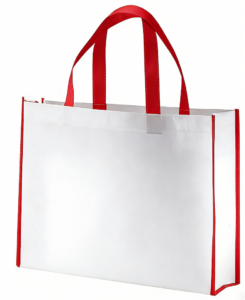
When businesses choose promotional bags to distribute at Handelsausstellungen, conferences, or as customer giveaways, they rarely stop to consider the environmental cost hidden within that simple piece of Ware. Yet the decision between recycled PET, virgin polypropylene, or natural fibers carries significant weight in terms of carbon emissions and overall environmental impact.
Every promotional bag produced contributes to our planet’s carbon footprint, and understanding these differences can help companies make choices that align with their sustainability goals.
The promotional bag industry produces millions of units annually, making it a surprisingly impactful sector when it comes to environmental concerns. The material you choose doesn’t just affect the bag itself—it influences everything from raw material extraction through manufacturing, transportation, and eventual disposal.
This comprehensive guide walks you through the carbon footprint of three popular promo bag materials, comparing their lifecycle impacts in practical terms you can actually use for decision-making.
Understanding Carbon Footprint and Lifecycle Assessment:
Before comparing specific materials, it helps to understand what we mean by carbon footprint and how we measure it. A carbon footprint represents the total amount of greenhouse gases, primarily carbon dioxide and methane, produced directly and indirectly by an activity, product, or organization. For promotional bags, we measure this across the entire lifecycle, from extracting raw materials through manufacturing, packaging, transportation, use, and eventual disposal or recycling.
Lifecycle assessment, or LCA, is the methodology we use to calculate these impacts comprehensively. It looks at every stage of a product’s journey. When we assess a promotional bag made from recycled PET, we consider the energy required to collect and sort used plastic bottles, the processing needed to convert them into usable material, the manufacturing process, shipping to distribution centers, and finally what happens when the bag reaches the end of its useful life. This holistic approach gives us a much clearer picture than simply looking at one stage of production.
The carbon footprint is typically measured in kilograms of carbon dioxide equivalent, or kg CO2e. This standardized unit allows us to compare different types of emissions on an equal basis. A kilogram of methane, for instance, has a much higher warming potential than a kilogram of carbon dioxide, so scientists convert everything to CO2 equivalent for easier comparison.
Carbon Footprint of Promo Bags: – 1
1.Recycled PET: The Second-Life Option
Recycled PET, commonly abbreviated as rPET, comes from post-consumer plastic bottles that have already served their original purpose. When manufacturers use recycled PET for promotional bags, they’re diverting waste from landfills and reducing the need for virgin plastic production. This sounds environmentally friendly on the surface, and in many ways it is, but the story is more complex.
The collection and sorting process for recycled PET requires significant energy input. Plastic bottles must be gathered from consumers, transported to sorting facilities, cleaned, sorted by type and color, and processed into small pellets that manufacturers can use. This preprocessing stage consumes electricity and sometimes requires water for cleaning. However, this energy investment is typically much lower than the energy needed to extract and process virgin petroleum into new plastic resin.
One of the biggest advantages of recycled PET is that it bypasses the energy-intensive petroleum extraction and refining stages. Producing virgin PET requires drilling for crude oil, transporting it to refineries, and running energy-intensive refining and polymerization processes. Recycled PET skips most of these steps, starting instead with already-polymerized material that just needs reprocessing.
For a typical promotional bag made from recycled PET, the carbon footprint falls between 0.8 and 1.2 kg CO2e per bag, depending on factors like the bag’s size, the efficiency of the recycling facility, and transportation distances. The manufacturing process itself is relatively low-impact once you have the recycled material in hand. The real benefit comes from avoiding the extraction and initial processing of virgin petroleum.
The challenge with recycled PET is that it requires an existing infrastructure of collection, sorting, and processing facilities. In regions without robust recycling systems, the environmental benefit diminishes significantly. Additionally, recycled PET can only be recycled a limited number of times before the polymer chains degrade and the material becomes unsuitable for reuse.
Carbon Footprint of Promo Bags: – 2
2.Virgin Polypropylene: The Conventional Choice
Virgin polypropylene, or PP, represents the conventional choice for many promotional bag manufacturers. It’s derived from crude oil through extraction, refining, and polymerization processes. Polypropylene is popular in the promotional bag industry because it’s durable, relatively inexpensive, and offers good customization options for printing logos and designs.
The carbon footprint of virgin polypropylene is substantially higher than recycled PET because of the energy-intensive petroleum extraction and processing stages. Producing one kilogram of virgin polypropylene resin generates approximately 2.5 to 3.5 kg of CO2 equivalent emissions. For a typical promotional bag weighing around 50 grams, this translates to roughly 0.125 to 0.175 kg CO2e just for the raw material production.
When you add in the manufacturing process—melting the resin, forming it into bags, printing designs, cutting, and assembling—the total carbon footprint for a virgin polypropylene promotional bag typically ranges from 1.5 to 2.2 kg CO2e. This is significantly higher than recycled alternatives.
Virgin polypropylene does have some advantages beyond cost. It’s a flexible, lightweight material that can be manufactured into various styles and thicknesses. It’s also recyclable, though in practice, many polypropylene bags end up in landfills because the recycling infrastructure for this material is less developed than for PET. The material also degrades very slowly in landfill environments, potentially persisting for hundreds of years.
The production process for virgin polypropylene also carries environmental costs beyond carbon emissions. Oil extraction can damage ecosystems, petroleum refining generates hazardous waste, and the overall process consumes significant water resources. While these impacts aren’t captured in a simple carbon footprint calculation, they’re important to consider when evaluating the true environmental cost.
Carbon Footprint of Promo Bags: – 3
3.Natural Fibers: The Sustainable Alternative
Natural fiber promotional bags, typically made from cotton, jute, canvas, or hemp, represent a fundamentally different approach to sustainable merchandise. These materials come from renewable agricultural sources rather than fossil fuels, which immediately changes the carbon calculation.
Cotton bags have a carbon footprint of approximately 0.5 to 1.2 kg CO2e per bag, depending heavily on agricultural practices. Conventionally grown cotton requires significant pesticide and fertilizer inputs, which increase the carbon footprint through manufacturing and transportation of these chemicals. Organic cotton, grown without synthetic pesticides and fertilizers, typically falls on the lower end of this range. The manufacturing process for cotton bags is relatively simple—the fabric is woven, cut, and sewn—so it doesn’t add enormous amounts of additional emissions.
Jute and hemp bags often have even lower carbon footprints, ranging from 0.3 to 0.8 kg CO2e per bag. These materials grow quickly without requiring intensive chemical inputs, and they’re processed into fabric through relatively straightforward mechanical processes. Jute, in particular, is considered one of the most environmentally friendly natural fiber options because it requires minimal pesticide use and grows abundantly in regions like Bangladesh and India.
The real advantage of natural fiber bags extends beyond carbon footprint. These materials are biodegradable, meaning they break down naturally in the environment without persisting for centuries like synthetic plastics. They’re also compostable, so even if they end up in landfills, they decompose within a few years rather than remaining indefinitely.
However, natural fiber bags aren’t perfect from an environmental perspective. Agricultural production for cotton, jute, and hemp requires land, water, and often involves pesticide use. Cotton in particular is known as a water-intensive crop. Additionally, natural fiber bags are heavier than plastic alternatives, which increases transportation emissions. A cotton tote bag might weigh three times as much as a polypropylene bag of similar size, meaning more fuel is consumed transporting it from manufacturer to distributor.
Lifecycle Comparison: From Cradle to Grave
To truly understand the environmental impact of different promotional bag materials, we need to compare their entire lifecycles. This includes raw material extraction, manufacturing, packaging, transportation to distribution points, use phase, and end-of-life disposal or recycling.
For recycled PET bags, the lifecycle carbon footprint typically totals around 1.0 to 1.3 kg CO2e. The material production stage is significantly lower than virgin plastics because it avoids petroleum extraction. Manufacturing adds modest additional emissions. Transportation represents a variable factor depending on shipping distances. The use phase contributes minimal emissions since promotional bags are passive products. End-of-life scenarios vary—if the bag is recycled again, the environmental benefit continues; if it ends up in a landfill, it persists indefinitely without further impact.
Virgin polypropylene bags carry a total lifecycle carbon footprint of approximately 1.8 to 2.5 kg CO2e. The higher material production stage dominates this calculation. Manufacturing and transportation add similar amounts to recycled PET bags. The key difference is the material stage, where petroleum extraction and processing are energy-intensive. End-of-life disposal typically means landfill, where the material persists for centuries.
Natural fiber bags, particularly organic cotton or jute, typically have lifecycle carbon footprints ranging from 0.6 to 1.4 kg CO2e. The lower end of this range applies to jute or hemp bags with minimal agricultural inputs. The higher end represents conventionally grown cotton with significant pesticide and fertilizer use. One advantage of natural fibers is that end-of-life disposal is benign—the bag composts or biodegrades, returning nutrients to soil.
Carbon Footprint Comparison Table:
Here’s a practical breakdown you can use for decision-making:
| Material | Raw Material CO2e | Manufacturing CO2e | Transportation CO2e | Total Lifecycle CO2e | Recyclability | Biodegradability |
|---|---|---|---|---|---|---|
| Recycled PET | 0.3-0.5 kg | 0.3-0.4 kg | 0.2-0.3 kg | 0.8-1.2 kg | Yes (limited cycles) | No (100+ years) |
| Virgin Polypropylene | 1.2-1.5 kg | 0.3-0.4 kg | 0.2-0.3 kg | 1.7-2.2 kg | Yes (rarely done) | No (100+ years) |
| Organic Cotton | 0.3-0.5 kg | 0.2-0.3 kg | 0.2-0.4 kg | 0.7-1.2 kg | Limited | Yes (3-6 months) |
| Conventional Cotton | 0.5-0.7 kg | 0.2-0.3 kg | 0.2-0.4 kg | 0.9-1.4 kg | Limited | Yes (3-6 months) |
| Jute | 0.2-0.3 kg | 0.1-0.2 kg | 0.2-0.3 kg | 0.5-0.8 kg | Limited | Yes (1-2 months) |
| Hemp | 0.2-0.4 kg | 0.1-0.2 kg | 0.2-0.3 kg | 0.5-0.9 kg | Limited | Yes (2-3 months) |
These figures represent typical values for standard promotional bags. Actual emissions depend on specific production methods, transportation distances, bag size, and regional factors.
Making the Right Choice for Your Business:
Selecting the right promotional bag material requires balancing multiple factors beyond just carbon footprint. Budget constraints often push companies toward virgin polypropylene, which remains the cheapest option. However, the price difference between materials is narrowing as demand for sustainable options increases.
If your company has made sustainability commitments or wants to align with environmentally conscious consumers, recycled PET offers a middle ground—better than virgin plastic but not as carbon-light as natural fibers. It’s particularly effective if you can communicate the recycled content to recipients, turning the bag itself into a marketing message about your company’s environmental values.
Natural fiber bags make the strongest environmental statement, particularly if you choose organic cotton, jute, or hemp. These bags signal genuine commitment to sustainability. However, they’re heavier, more expensive, and may not suit every promotional purpose. A jute tote bag works beautifully for a sustainable fashion brand but might not fit the needs of a technology company.
Consider your distribution method as well. If bags are shipped internationally, the heavier weight of natural fiber materials increases transportation emissions significantly. For local distribution, this factor matters less.
Schlussfolgerung:
The carbon footprint of promotional bags varies dramatically based on material choice, ranging from approximately 0.5 kg CO2e for efficient jute bags to over 2.2 kg CO2e for virgin polypropylene options. This represents a four-fold difference in environmental impact for what might appear to be the same product.
Recycled PET offers a practical compromise for businesses seeking Umweltverantwortung without the higher costs of natural fibers. Virgin polypropylene remains the conventional choice but carries the highest carbon cost and environmental persistence. Natural fibers like jute, hemp, and organic cotton provide the lowest carbon footprints and genuine biodegradability, though at higher costs and with increased transportation impacts due to weight.
When selecting promotional bags, examine your company’s sustainability goals, budget constraints, and the message you want to send to customers. The most environmentally responsible choice isn’t always the same for every business. However, understanding these carbon footprint differences empowers you to make informed decisions that align with your values and environmental commitments.
Start by calculating how many bags you distribute annually, multiply that by the appropriate carbon footprint figure, and you’ll have a concrete understanding of your promotional bag program’s environmental impact. From there, you can explore how switching materials might reduce that footprint and support your broader Nachhaltigkeit objectives.
FAQs About the Carbon Footprint of Promotional Bags: – 1
1. Why is the carbon footprint important when choosing promotional bags?
The carbon footprint measures the total greenhouse gas emissions associated with producing, transporting, using, and disposing of a product. Promotional bags often distribute in large quantities, so even small differences in their carbon footprint can add up to significant environmental impact. Choosing bags with a lower carbon footprint helps reduce your company’s overall contribution to climate change.
2. Can recycled PET bags be recycled again after use?
Recycled PET bags can technically be recycled again, but the quality of the material degrades with each recycling cycle. This means recycled PET typically can only be recycled a limited number of times before it becomes unsuitable for making new products. Proper recycling infrastructure is also necessary to ensure these bags don’t end up in landfills or the environment.
3. How do natural fiber bags compare to plastic bags in terms of durability?
Natural fiber bags like cotton, jute, or hemp are generally more durable and sturdier than typical thin plastic polypropylene bags. They can carry heavier loads and withstand repeated use, which encourages consumers to use them multiple times. This reuse factor can offset some of the higher initial carbon footprint associated with producing natural fibers.
FAQs about Carbon Footprint of Promo Bags: – 2
4. Are organic cotton bags always better than conventional cotton bags?
Organic cotton bags usually have a lower carbon footprint because they avoid synthetic pesticides and fertilizers, which require energy to produce and release greenhouse gases. However, organic farming can sometimes yield less cotton per acre, requiring more land. Overall, organic cotton tends to be more environmentally friendly but it’s important to consider the full lifecycle impact.
5. What happens to promotional bags if they are thrown away?
Promotional bags made from virgin polypropylene or recycled PET can persist in landfills and the environment for hundreds of years since they do not biodegrade. Natural fiber bags degrade much faster, typically within months to a few years, depending on conditions. Unfortunately, many bags end up as litter or in oceans, contributing to pollution and harming wildlife.
6. Does the weight of the bag affect its carbon footprint?
Yes, heavier bags generally have higher carbon footprints because they require more raw material to produce and consume more fuel during transportation. Natural fiber bags often weigh more than plastic alternatives, which can increase emissions during shipping. However, their biodegradability and reusability often compensate for this impact.
FAQs about Carbon Footprint of Promo Bags: – 3
7. Can printing logos or designs increase the carbon footprint of promo bags?
Yes, additional printing and finishing processes add to the carbon footprint by consuming inks, energy, and sometimes chemicals. The environmental impact depends on the printing method and materials used. Water-based and eco-friendly inks reduce emissions compared to traditional solvent-based inks.
8. Are there certifications that help verify the environmental claims of promotional bags?
Yes, certifications such as Global Organic Textile Standard (GOTS) for organic fibers, Recycled Content Certification for recycled PET, and OEKO-TEX for textile safety can help verify sustainability claims. Look for these labels when sourcing promotional bags to ensure transparency and credibility.
9. How can companies encourage recipients to reuse promotional bags?
Offering higher-quality, attractive bags that people want to keep increases reuse rates. Educating recipients about the bag’s materials and environmental benefits also helps. Some companies add care instructions or highlight reusability in their marketing materials to promote longer use.
10. Is it better to distribute fewer bags or choose a more sustainable material?
Both approaches can reduce environmental impact. Distributing fewer bags lowers total emissions regardless of material choice. However, selecting sustainable materials amplifies benefits by reducing emissions per bag. The best strategy combines thoughtful quantity with environmentally responsible materials.