


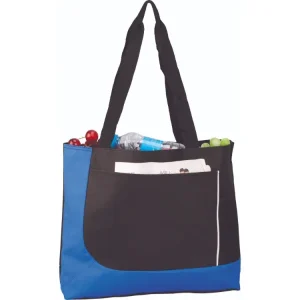


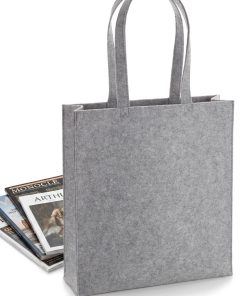
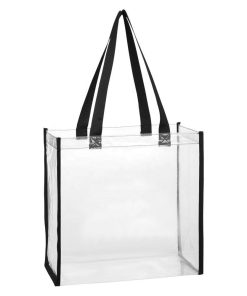
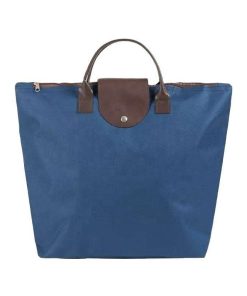
Show your logo with this Customizable 600D Oxford Cloth Tote Waterproof Thread with PVC & Polyester Lining Open Closure Type Women’s 2-2.9L Single Strap at event!
- 600-denier polyester
- Large main compartment with a secure zippered top closure
- Open front pocket for additional accessories
- Over-the-shoulder webbing handles
There is plenty of room to store multiple items in this must-have carry-all tote. Available in a variety of colors, it features a secure zippered top closure. The webbing handles are long enough to carry comfortably over your shoulder. Perfect for daily use, work, the office, school, travel, and more.
Product Specifications about Customizable 600D Oxford Cloth Tote Waterproof Thread with PVC & Polyester Lining Open Closure Type Women’s 2-2.9L Single Strap:
| Item |
Customizable 600D Oxford Cloth Tote Waterproof Thread with PVC & Polyester Lining |
|---|---|
| Material | Polyester 600d |
| Printing | Silk Screen/Heat Transfer/Digital/Embroidery |
| Größe | 16″*3.5″*13″ |
| Color | CMYK or Pantone color available |
| MOQ | 500 – 1000pcs |
| Usage |
|
Different between Oxford & Polyester:
Does Oxford fabric make of polyester?
Yes, it frequently makes from polyester. In the context of bag manufacturing, Oxford refers to the specific weaving technique, while polyester indicates the type of fiber used. Additionally, Oxford fabric can also craft from other materials such as nylon or cotton, which affects its characteristics and applications.
Is Oxford fabric stronger than polyester?
The strength of Oxford fabric compared to polyester largely depends on the specific fibers, the denier (which denotes the thickness of the yarn), and any coatings that may apply. For instance, a high-denier polyester or nylon Oxford fabric will generally outperform a lighter hollow weave polyester, but a comprehensive comparison requires analyzing each element — fiber, denier, and any finishes — rather than relying solely on the general term “Oxford.”
Is nylon Oxford better than polyester Oxford?
Nylon Oxford typically offers enhanced abrasion resistance and a softer hand-feel compared to polyester Oxford fabric when both manufacture at the same denier. However, this advantage comes with a higher price tag. Thus, for most commercial bag lines, polyester Oxford strikes a better balance between cost and performance, whereas nylon Oxford often prefer in premium outdoor gear and tactical equipment that demands greater durability and strength.
Is Oxford fabric waterproof?
Oxford fabric is not inherently waterproof; it requires an additional coating to achieve water resistance. Coatings such as polyurethane (PU), polyvinyl chloride (PVC), or thermoplastic polyurethane (TPU) are applied to the fabric’s surface to confer that critical waterproof quality. Without these coatings, the fabric’s weave alone will not prevent water from penetrating.
What is 600D Oxford fabric?
600D Oxford fabric is a mid-to-heavy weight variation of Oxford fabric, where “600D” signifies the denier measurement that indicates yarn thickness. This type of fabric is one of the most commonly selected options for durable backpacks and cooler bags, primarily due to its excellent balance of strength, durability, and overall weight, making it a practical choice for a variety of applications.
Which is better for backpacks?
Oxford fabric, particularly in the denier range of 420D to 1680D, is generally regarded as the optimal choice for backpack construction. This range offers a balance of abrasion resistance, structural integrity, and weight considerations that are essential for effective backpack performance. Depending on the intended use, the choice of denier can vary to meet specific ruggedness and durability requirements.
Can Oxford fabric make from recycled materials?
Indeed, Oxford fabric can produce using recycled materials, notably recycled polyester (rPET) sourced from post-consumer polyethylene terephthalate (PET) bottles. This creates a more sustainable fabric alternative while maintaining the familiar Oxford weave structure. To confirm the presence of recycled content in such materials, look for Global Recycle Standard (GRS) certification, which verifies that the claims are legitimate.
Can a single bag use both Oxford and polyester fabric?
Absolutely, it is quite commonplace for a single bag to incorporate both Oxford and polyester fabrics. Typically, heavier Oxford fabrics are utilized for areas that experience higher wear and tear, such as structural panels, while lighter polyester is often to use for linings or additional panels. This strategic combination allows manufacturers to efficiently balance durability, weight, and cost, thereby enhancing the overall functionality of the bag.


Bewertungen
Es gibt noch keine Bewertungen.