


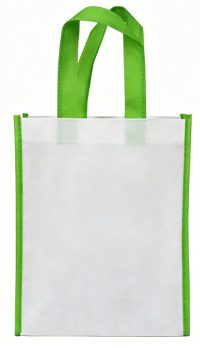
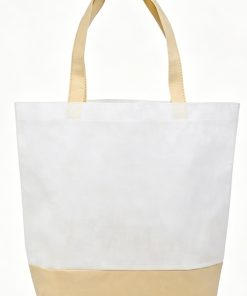
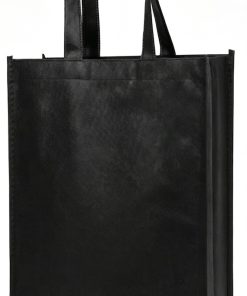
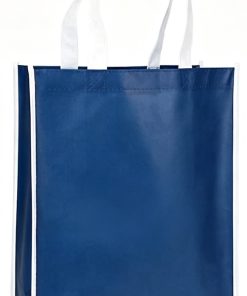
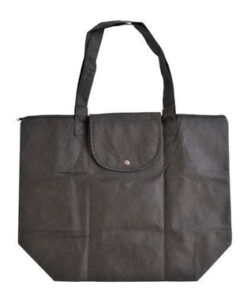
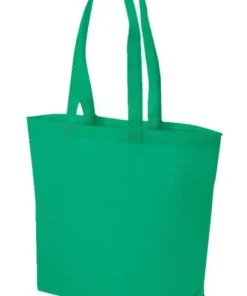
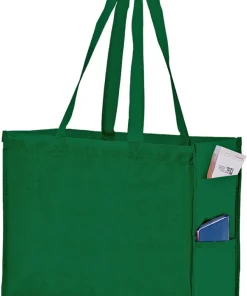
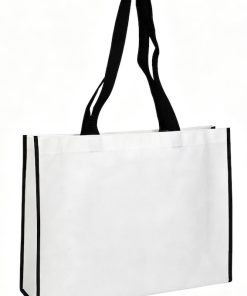
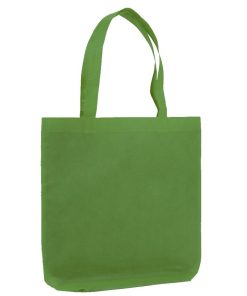
En Customized Design Non Woven Gift Bag Cheap Non Woven Bag Eco Reusable Non-woven Shopping Bag will be a hit at your next promotional event!
- Fabricado en polipropileno no tejido reciclado de 80 g/m².
- You can easily carry around your baggage in the spacious main compartment of the bag such as an iPad, notebooks, folders, and more.
- Hand out these awesome bags at your next promotional event to help potential customers remember your business!
These bags design for durability and functionality, making them ideal for a variety of uses. Elevate your brand or event with our customizable options, creating a lasting impression with every use. Make an impact with quality and versatility – order your Wholesale Non-Woven Tote Bags today.
Product Specification about Customized Design Non Woven Gift Bag Cheap Non Woven Bag Eco Reusable Non-woven Shopping Bag:
| Artículo | Customized Design Non Woven Gift Bag Cheap Non Woven Bag |
|---|---|
| Material | 80g Non-Woven Polypropylene |
| Talla | 8″*4“*10” |
| Handle | Non-Woven Polypropylene (X Stitching) |
| Impresión | Silk screen / Heat transfer / Digital |
| MOQ | 500-1000 pcs |
| Packaging | Carton or customized packaging |
| Uso |
Types of Non-Woven: – 1
Non-woven fabrics can make using many techniques, each offering different properties and hence bringing different uses. Below are the most common types of non-wovens:
1.Spunbonded Non-Woven Fabric:
Spunbonded non-woven fabric create by extruding molten plastic to form continuous filaments, which deposite onto a moving conveyor belt and then bond together to create an inter-tangled web of fibers by heat. These fabrics are durable and lightweight and are ideal for surgical masks and gowns, disposable clothing, bolsas reutilizables, etc.
2.Spunlace Non-Woven Fabric:
Spunlace non-woven fabric produce by entangling fibers using high-pressure water jets. It is the hydro-entangled process. The result is a soft, yet strong fabric ideal for applications where softness and absorbency are required, such as wet wipes, medical dressings, and cleaning cloths.
3.Heat-Bonded Non-Woven Fabric:
Heat-bonded non-woven fabrics create by applying heat to fiber webs, causing them to fuse without melting. This process call thermal bonding.
This fabric type is highly mechanical and to use in industries that require strength and durability, such as automotive insulation and protective clothing like surgical gowns.
4.Meltblown Non-Woven Fabric:
Meltblown non-woven fabric make by extruding molten plastic through fine nozzles, producing fine fibers that collect to form a porous, lightweight fabric. It offers superior moisture-wicking and barrier capabilities.
This type of non-woven fabric is widely to use in filtration applications, such as air filters, face masks, and products requiring liquid repellency.
5.Nonwoven Composite Fabrics:
More importantly, spunbond and meltblown can combine together to create stronger fabric. Take SMS as an example. SMS fabrics (Spunbond-Meltblown-Spunbond) contain three layers: two outer Spunbond layers and a central Meltblown layer. They are totally made from polypropylene and are widely used in filtration, insulation, medical healthcare, and sanitary products.
Types of Non-Woven: – 2
6.Multilayer nonwovens:
sometimes called composite or multiple-fiber nonwovens—engineer by stacking several layers of different fiber types or structures, each delivering distinct functionalities. For instance, one layer may provide water repellency, while another adds fire retardancy, and a third enhances filtration efficiency. This layered construction allows for tailored properties within a single fabric, making composite nonwovens like SMS especially popular in applications demanding a balance of strength, softness, and barrier performance, such as surgical drapes, sterile packaging, and high-performance air filters.
7.Wet Non-Woven Fabric:
Wet-laid nonwoven fabrics make by using water to disperse fibers, which are then bond together mechanically. These fabrics are soft and are often to use in paper-like materials, such as tissues and filters. Wet non-wovens are also ideal for use in home furnishings.
8.Stitch-bonded Non-Woven Fabric:
Stitch-bonded nonwoven fabric create by stitching fibers together with yarn, which results in a flexible, strong fabric. These fabrics use in automotive upholstery, carpet backing, and other products that require durable, mechanical properties.
9.Hydrophilic Nonwoven Fabric:
Hydrophilic nonwoven fabrics can absorb and retain liquid. Therefore, they use in hygiene-related sanitary products like diapers, sanitary napkins, and medical wipes.
10.Solvent Bond Non-Woven Fabric:
Solvent-bonded non-woven fabrics produce by first creating a web of fibers, typically a blend of acrylic and polyester. A carefully controlled amount of solvent is then applied to the web, which causes the surfaces of the fibers to partially dissolve and bond at their contact points. This bonding process forms a stable, unified fabric structure while preserving flexibility. The resulting material is useful in applications where strength, chemical resistance, and uniformity are desired, making it a good fit for specialty filtration media, wipes, and industrial products.
Valoraciones
No hay valoraciones aún.