


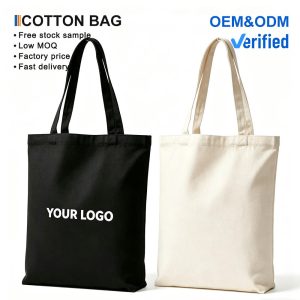
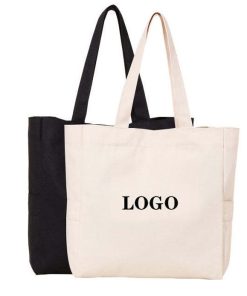
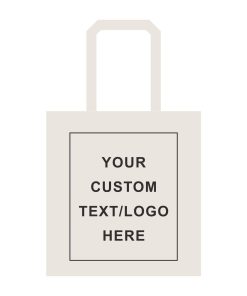
The Wholesale Custom Durable Eco-Friendly Personalized Logo High Quality Black 100% Cotton Shoulder Bags are great for your eco-friendly promotional option!
- Made of light weight 5.oz cotton canvas.
- 25″ Long cotton canvas handle for easy-to-carry.
- This budget cotton shopping bag is comfortable to carry and is great for supplies, groceries and so much more!
Cotton is a naturally sourced material which means these bags meet all the eco friendly credentials. Their versatility draws advertising departments from every business sector to use them as brand promoters. In retail shopping and supermarkets, these sustainable bags are perfect for carrying purchased goods. In schools, universities and colleges they are used for carrying books and stationery to and from the classroom.
Product Specifications about Wholesale Custom Durable Eco-Friendly Personalized Logo High Quality Black 100% Cotton Shoulder Bags:
| Artículo | Wholesale Custom Durable Eco-Friendly High Quality 100% Cotton Shoulder Bags |
|---|---|
| Material | Cotton Canvas |
| Impresión | Silk Screen/Heat Transfer/Digital/Embroidery |
| Talla | 13″*15″ |
| Color | CMYK or Pantone color available |
| MOQ | 500 – 1000pcs |
| Uso |
Evaluating Tote Bag Material Prior to Bulk Production:
Material approval involves more than just choosing a color swatch; it’s essential for both the buyer and manufacturer to clearly define the performance requirements of the entire bag.
1.Verify Material Composition
Avoid ambiguous terms like:
- Eco fabric
- Lienzo
- Recycled material
- Nylon-like fabric
- Heavy cotton
Request a detailed description that includes fiber composition, fabric construction, and any coatings or laminations used.
2.Check Weight and Construction
Record relevant measurements such as GSM, ounces, or denier, but ensure you’re comparing these figures within the same material category. Physical samples are more dependable than isolated specifications from different textiles.
Also, assess the weave density and surface; tightly woven materials may yield sharper print results and enhanced dimensional stability when compared to looser fabrics of similar weight.
3.Examine Coatings and Laminations
Confirm whether the material has:
- PU coating
- PVC coating
- BOPP lamination
- Water-repellent treatment
- Internal film
- Other surface treatments
The supplier should clarify if the finish is applied to the inner side, outer side, or both.
4.Test the Final Artwork
Conduct a print test using the final logo dimensions, colors, and the expected production method. Assess:
- Fine details
- Small text
- Color fidelity
- Ink coverage
- Adhesion
- Cracking
- Bleeding
- Visual effects over seams or textures
A logo that appears well on a digital mock-up may perform differently on coarse jute or dark canvas.
5.Assess the Complete Bag
The bag’s body is just one component of its load-bearing structure. Handles and attachment points often play a significant role in the bag’s functionality. Review:
- Handle width and material
- Stitching patterns
- Reinforcement patches
- Seam allowances
- Bag dimensions
- Bottom and side construction
- Linings
- Closures
- Anticipated contents
For further guidance on this aspect, refer to guides like “Bag Handle Types Explained” and “Webbing Handles vs. Self-Fabric Handles.”
6.Review Environmental and Safety Certifications
Different standards validate various properties of textile products:
- GOTS (Global Organic Textile Standard) addresses certified organic textiles and specific processing stages.
- GRS (Global Recycled Standard) and RCS (Recycled Claim Standard) focus on recycled content and chain-of-custody requirements.
- OEKO-TEX STANDARD 100 tests for harmful substances in textile products.
These certifications are not interchangeable; for example, OEKO-TEX STANDARD 100 does not confirm that cotton is organic, while recycled content claims require more than just a general safety test.
Always verify the certificate holder, the scope of certified products, and the validity of the certification instead of relying solely on logos in a catalog.
7.Approve a Pre-Production Sample
Evaluate a sample before commencing bulk production, using realistic contents and conditions, which may include:
- Loading and carrying
- Pulling handles repeatedly
- Washing or spot cleaning
- Water exposure
- Print durability tests
- Folding and unfolding
- Testing zippers or closures
- Measuring dimensions before and after cleaning
By following these steps, you can ensure that the tote bags meet quality, safety, and performance standards before mass production.

Valoraciones
No hay valoraciones aún.