


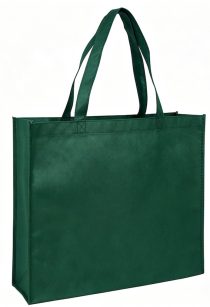

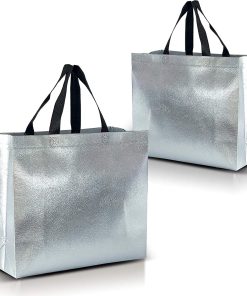
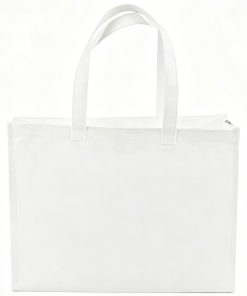
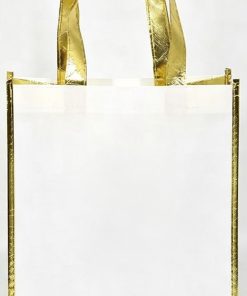
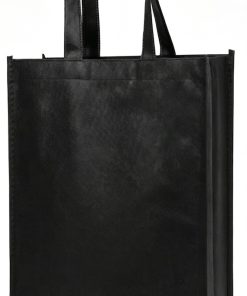
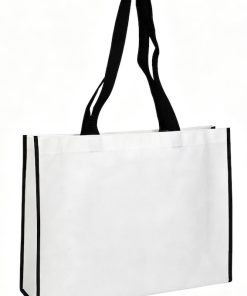
Custom Personalized Non Woven Bag Promotional Reusable Cloth Shopping Tote Bags Pp Laminated Non Woven Shopping Bag with your logo to promote your business or organization!
- Ce sac fourre-tout est fabriqué à partir de RPET non tissé recyclé de 80 g.
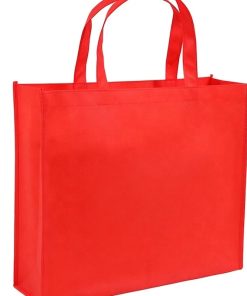
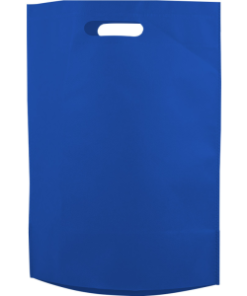
- Nous proposons une large gamme de couleurs qui s'harmonisent avec celles de votre entreprise.
- Faites sensation avec un sac fourre-tout personnalisé lors de votre prochain événement ou salon professionnel !
Design with durability and convenience in mind, these bags are the ideal solution for carrying épicerie, retail items, and more.Perfect for everyday use, these bags design to meet all your shopping needs while supporting your brand and the environment.
Product Specification about Custom Personalized Non Woven Bag Promotional Reusable Cloth Shopping Tote Bags Pp Laminated Non Woven Shopping Bag:
| Item | Custom Personalized Non Woven Bag Promotional Reusable Cloth Shopping Tote Bags |
|---|---|
| Matériau | 80g Non-Woven Polypropylene |
| Taille | 17″*4“*13” |
| Handle | Non-Woven Polypropylene (X Stitching) |
| Printing | Silk screen / Heat transfer / Digital |
| MOQ | 500-1000 pcs |
| Packaging | Carton or customized packaging |
| Usage |
Polyethylene vs. Polypropylene: What Sets Them Apart?
Though both polyethylene and polypropylene belong to the family of plastics, they have distinct characteristics and uses. The main difference lies in their molecular structure, which impacts their strength, flexibility, and environmental impact.
Polyethylene is popular for its flexibility and is often used in plastic bags, films, and bottles. It’s softer and can easily stretch or shape, making it ideal for packaging and protective covers.
Polypropylene, by contrast, offers greater rigidity and resistance to heat. This makes it especially well-suited for applications requiring durability and repeated use, such as sacs à provisions réutilisables, food containers, and, of course, non-woven fabrics. Polypropylene’s structure also makes it more resistant to chemicals and less prone to absorbing moisture compared to polyethylene.
When it comes to sustainability, polypropylene generally has a lower environmental impact if reused multiple times, especially since it’s robust enough to replace thinner, single-use plastics. Its recyclability and long lifespan have contributed to its growing popularity across various industries.
Avis
Il n’y a pas encore d’avis.